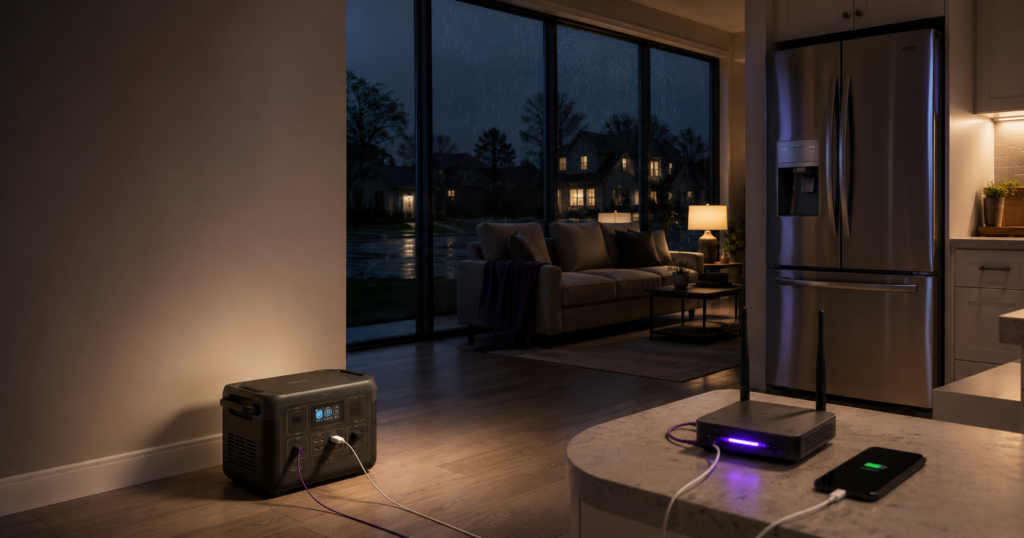


Compare battery capacity, continuous output, portability, and expandability to find the right backup-power system for refrigerators, routers, lights, electronics, and larger household loads.
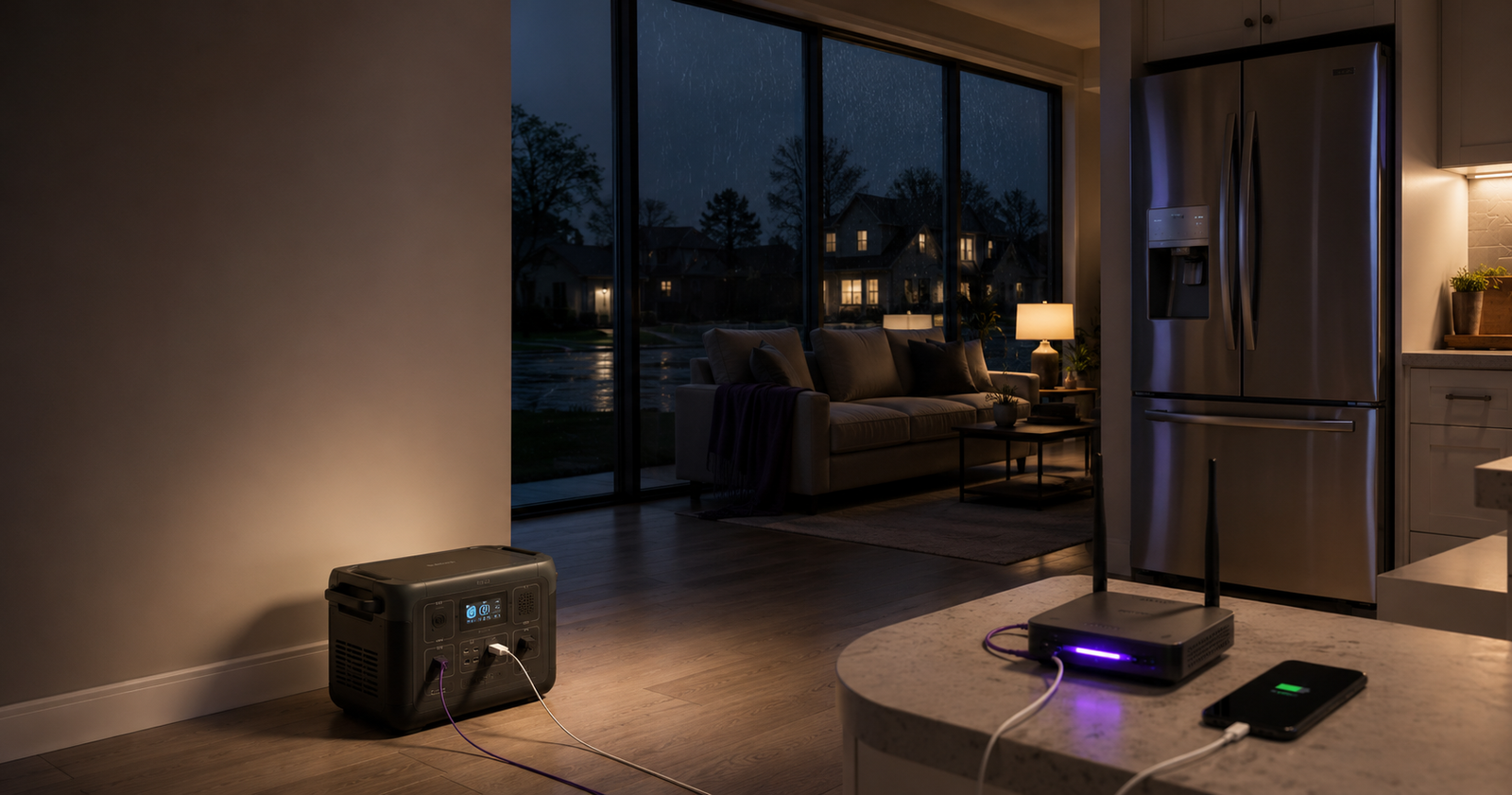
A portable power station can keep essential devices available during a short outage without the exhaust, fuel storage, or outdoor-only operation associated with a gasoline generator. The right size depends on two different numbers: the watts your devices demand at one time and the watt-hours of energy you want available.
This guide compares seven options in the DANANOA catalog, from compact 1kWh units for communications and refrigeration to expandable 120V/240V systems intended for more demanding home-backup plans. “Best” here means best suited to a particular use case based on published specifications—not a claim that one model is ideal for every household.
Quick comparison
| Model | Base capacity | Continuous AC output | Best fit |
|---|---|---|---|
| Anker SOLIX C1000 Gen 2 | 1,024Wh | 2,000W | Compact essential backup |
| Jackery Explorer 1000 v2 | 1,070Wh | 1,500W | Portable, straightforward backup |
| Anker SOLIX C2000 Gen 2 | 2,048Wh | 2,400W | Longer essential-device runtime |
| BLUETTI Apex 300 | 2,764.8Wh | 3,840W | Expandable home and RV use |
| Anker SOLIX F3000 | 3,072Wh | 3,600W | Balanced large-capacity backup |
| EcoFlow DELTA Pro 3 | 4,096Wh | 4,000W | High-demand 120V/240V backup |
| Jackery Explorer 5000 Plus | 5,040Wh | 7,200W | Expandable whole-home planning |
Capacity and output are manufacturer-published nominal figures. Actual usable energy and runtime vary with inverter losses, temperature, battery condition, device cycling, startup surge, and the selected operating mode.
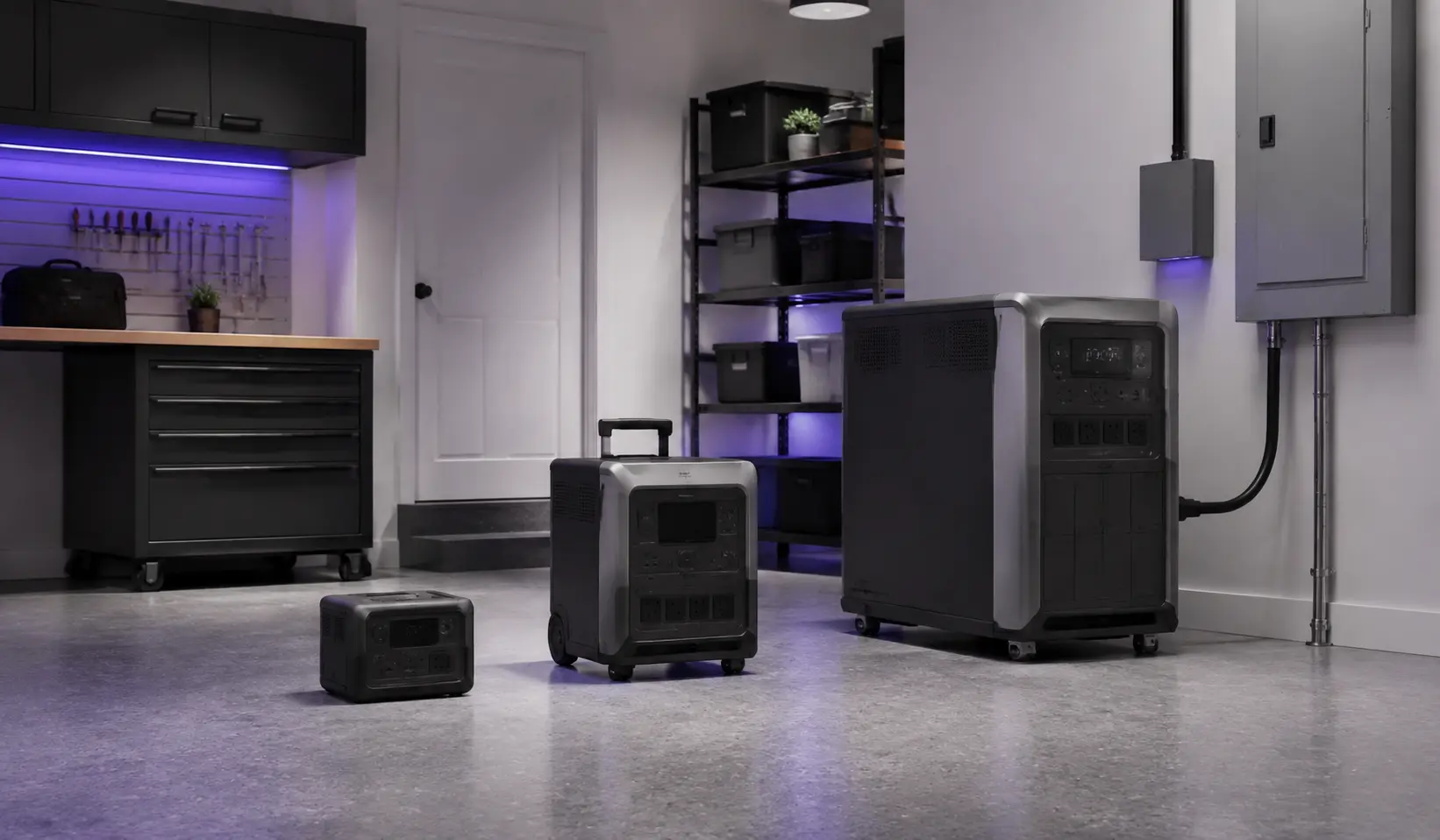
Our seven portable power station picks
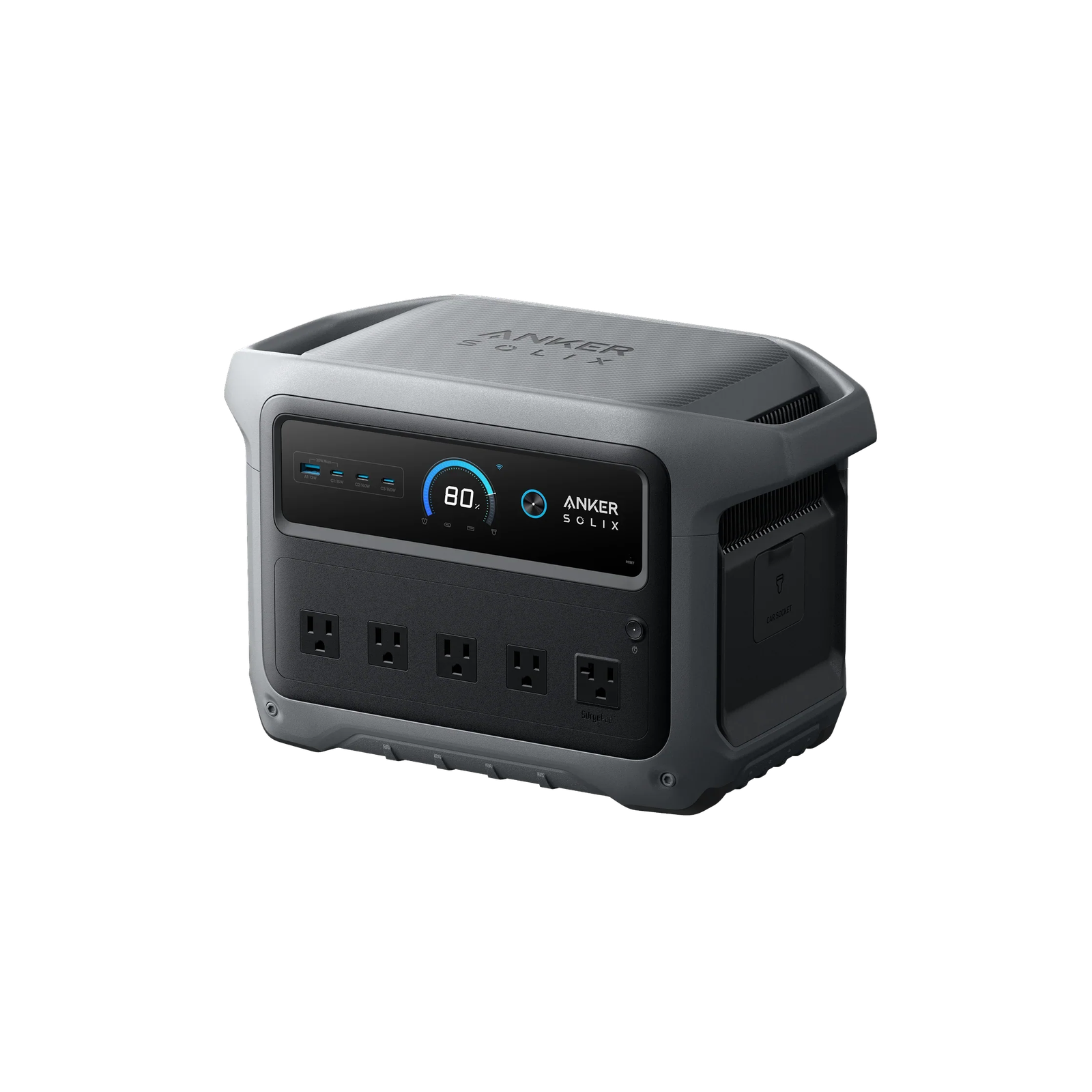
1. Anker SOLIX C1000 Gen 2
The C1000 Gen 2 combines a 1,024Wh battery with 2,000W continuous output in a relatively portable format. It is a sensible match for keeping a refrigerator, internet equipment, lighting, laptops, and phones available while still being practical to move or store.
Anker lists a 49-minute full AC recharge when its UltraFast mode is enabled in the app under the stated conditions. That speed is useful when grid power returns briefly between outages, but charging conditions and household circuits must meet the manufacturer's requirements.
View C1000 Gen 2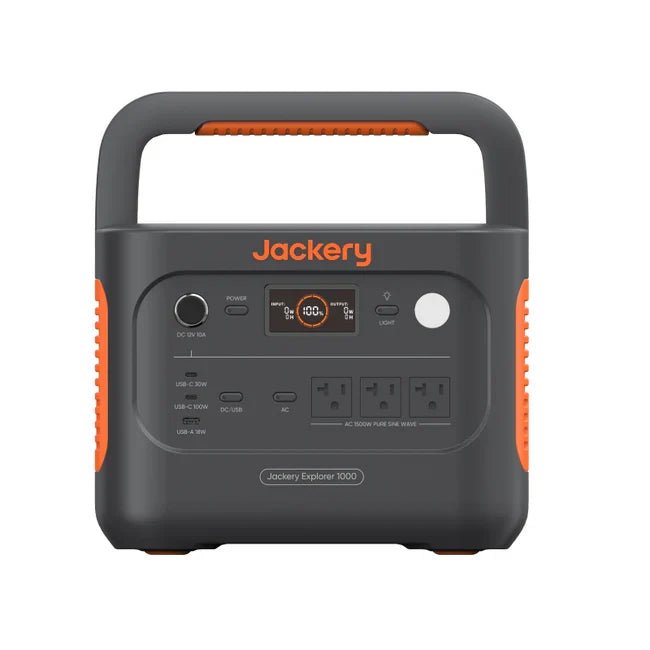
2. Jackery Explorer 1000 v2
The Explorer 1000 v2 is another strong 1kWh-class option. Its 1,070Wh battery and 1,500W continuous output suit lower- and medium-demand essentials, while the approximately 23.8-pound manufacturer-listed weight makes it easier to move than larger home-backup units.
Choose it when portability and simple essential-device coverage matter more than running several high-wattage appliances at once. Always compare the combined continuous load and the highest startup surge against the unit's limits.
View Explorer 1000 v2
3. Anker SOLIX C2000 Gen 2
With twice the nominal capacity of the C1000 Gen 2, the C2000 Gen 2 is better suited to longer essential-device coverage or a broader mix of electronics and kitchen appliances. Anker publishes 2,048Wh capacity and 2,400W continuous output.
This is a useful middle ground for buyers who want substantially more runtime than a 1kWh station without moving directly to a larger 3–5kWh platform. An optional compatible expansion battery can increase stored energy for longer outages.
View C2000 Gen 2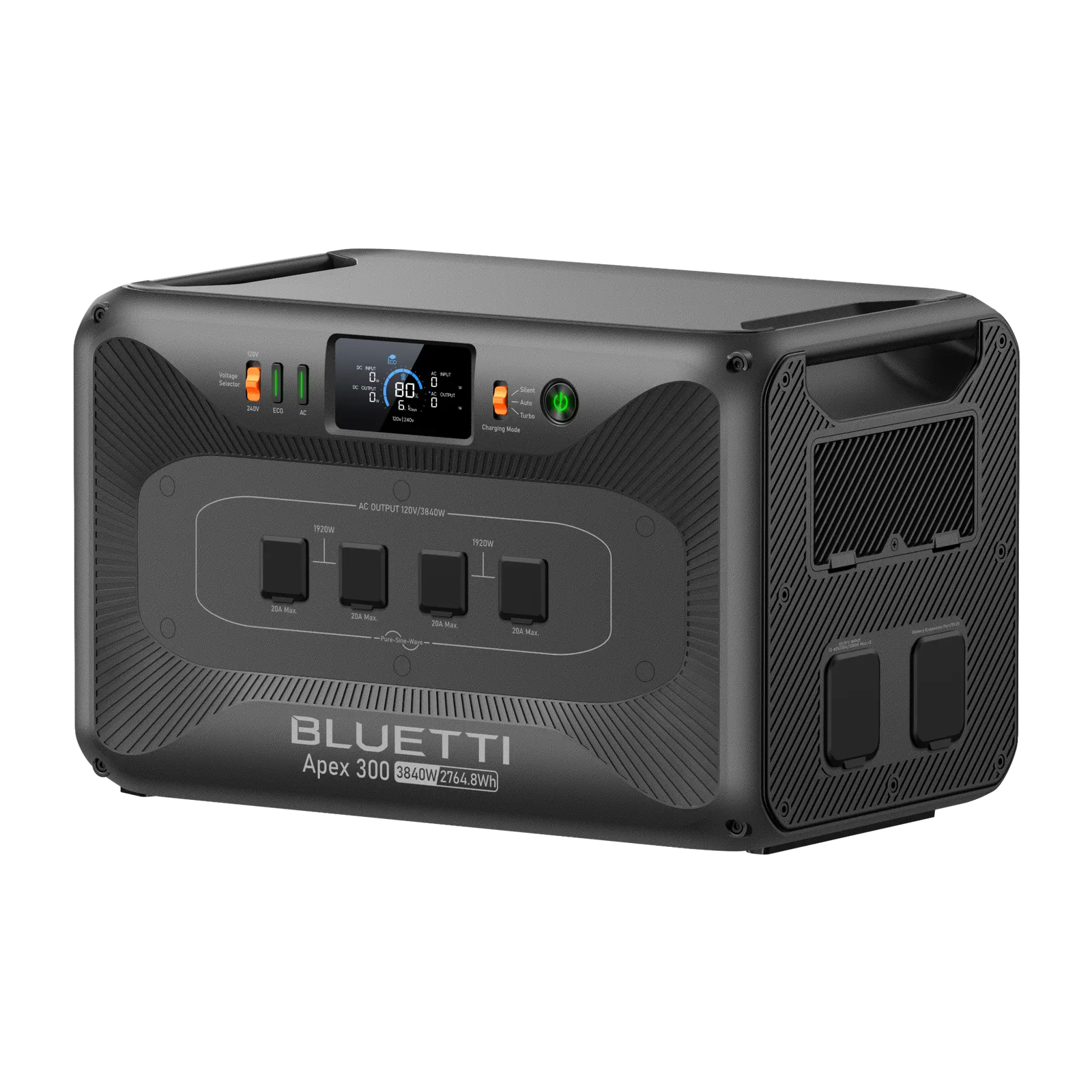
4. BLUETTI Apex 300
The Apex 300 moves beyond basic device charging into modular backup planning. BLUETTI lists 2,764.8Wh base capacity, 3,840W AC output, and 120V/240V capability, with compatible expansion options for users who need additional stored energy.
It is especially relevant for RV owners and households that want a platform they can expand over time. Confirm the exact outlets, required accessories, and supported configuration for your intended 240V load before purchase.
View Apex 300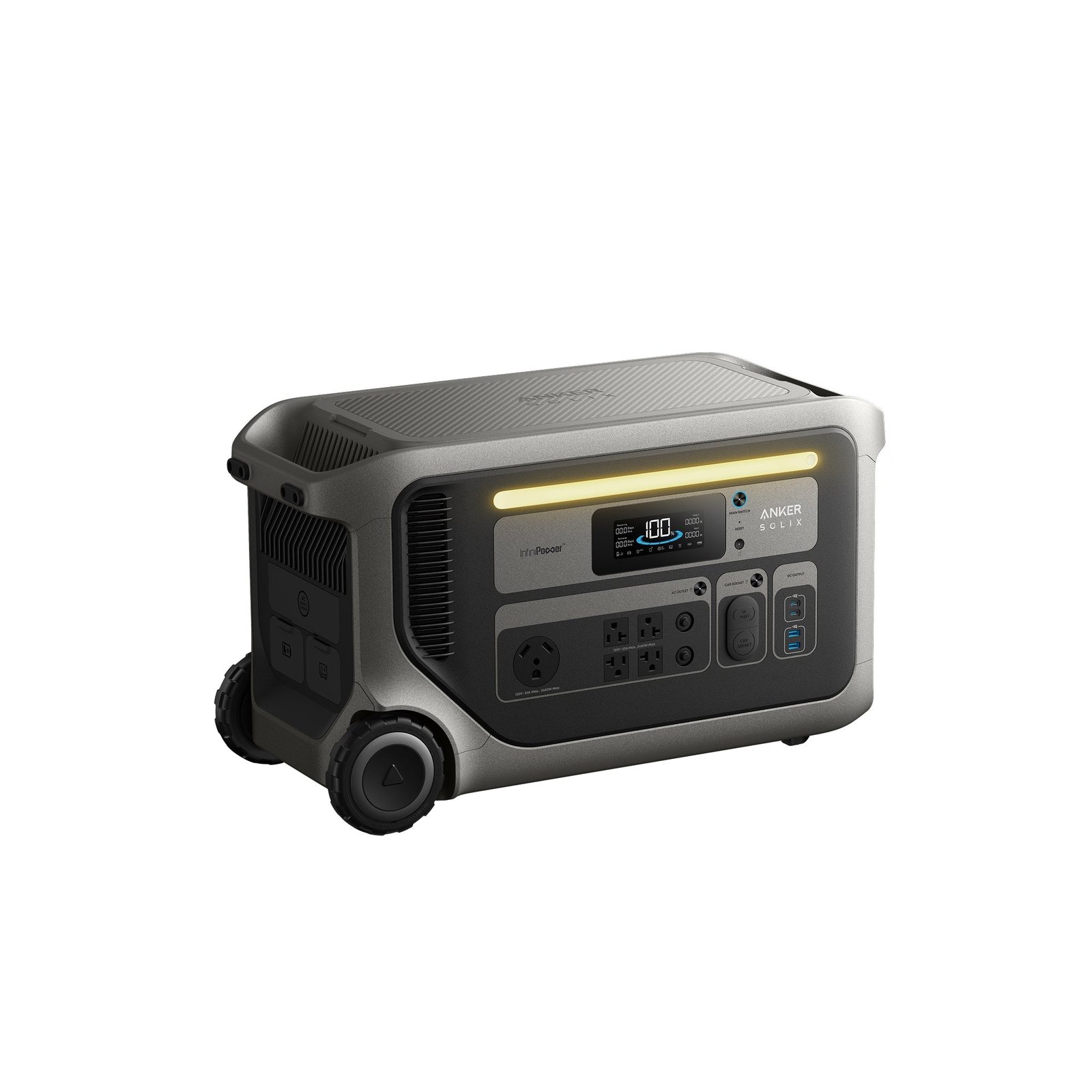
5. Anker SOLIX F3000
The F3000 offers a useful balance between stored energy and output for extended essential backup. Its published 3,072Wh capacity and 3,600W AC output can support a wider combination of devices than smaller portable stations.
Anker also lists pass-through operation and compatible generator and solar charging options. Treat it as part of a planned backup system: identify your required loads first, then confirm connectors, solar input limits, and any accessories needed for your intended setup.
View SOLIX F3000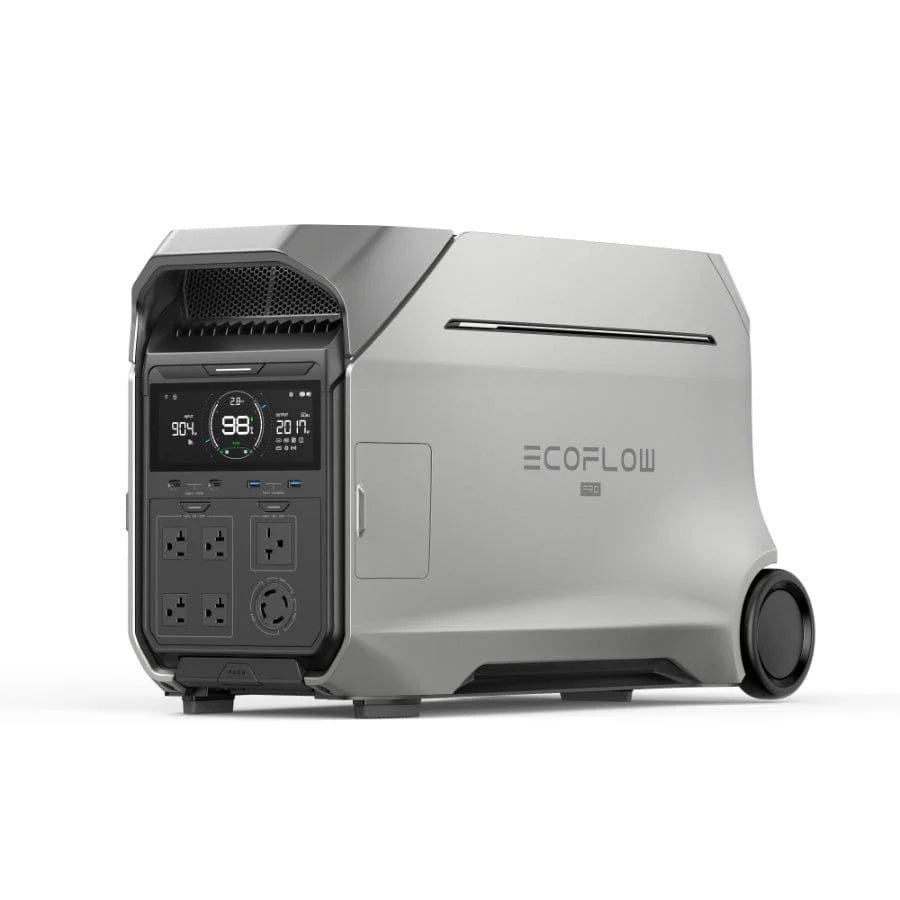
6. EcoFlow DELTA Pro 3
EcoFlow's DELTA Pro 3 starts with 4,096Wh of battery storage and 4,000W continuous AC output. Its native 120V/240V support makes it a more relevant candidate for buyers planning around higher-demand equipment than a standard 120V-only portable station can accommodate.
Its larger capacity also provides more room for overnight essential loads. If connecting backup power to household circuits, use only approved transfer equipment and qualified installation—never connect a portable power source to home wiring through an improvised cable.
View DELTA Pro 3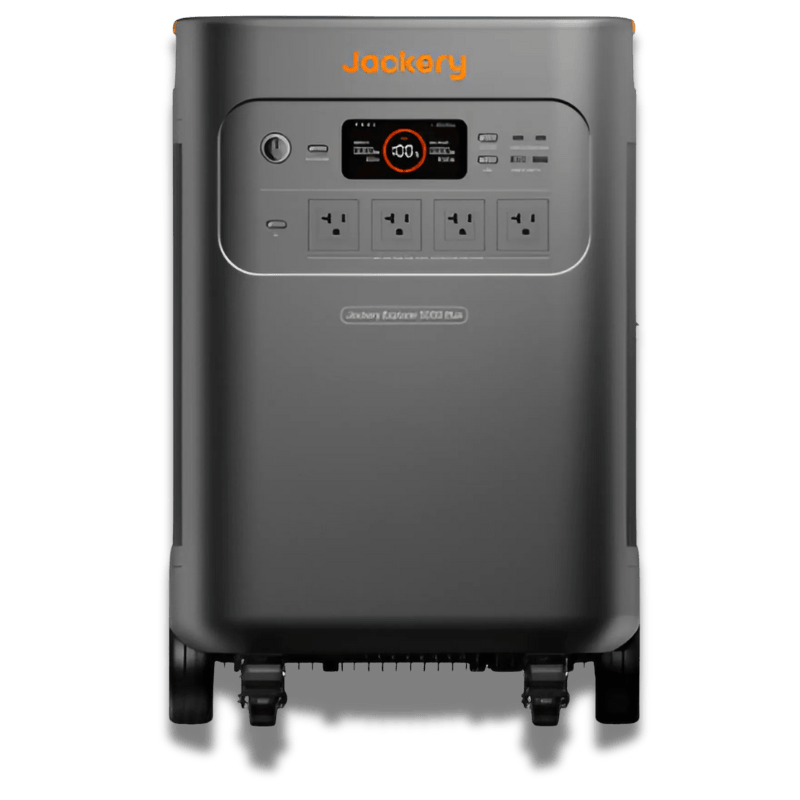
7. Jackery Explorer 5000 Plus
The Explorer 5000 Plus is the largest base system in this comparison. Jackery publishes 5,040Wh capacity, 7,200W output, 120V/240V operation, and expansion options for substantially more stored energy.
That makes it the strongest candidate here for a planned home-backup installation rather than occasional device charging. Its capabilities do not remove the need for load planning: central HVAC, electric water heating, cooking appliances, and well pumps can have demanding continuous and startup requirements.
View Explorer 5000 PlusShop all portable power stations
How to choose the right capacity
1. List the devices you must keep running
Separate necessities from convenience loads. A refrigerator, internet router, a few LED lights, phones, and a laptop require a very different system from central air conditioning, electric heating, a dryer, or a well pump.
2. Add continuous watts and check startup surge
The station's continuous output must cover everything operating at the same time. Motors and compressors can briefly demand more power when starting, so confirm both running watts and startup watts from each appliance label or manual.
3. Estimate runtime with watt-hours
A useful planning estimate is:
For example, a 1,024Wh station supporting an average 100W load may provide roughly 8.7 hours under this simplified estimate. It is not a guarantee: refrigerators cycle, batteries and inverters have losses, temperature matters, and some devices draw changing amounts of power.
4. Decide how you will recharge
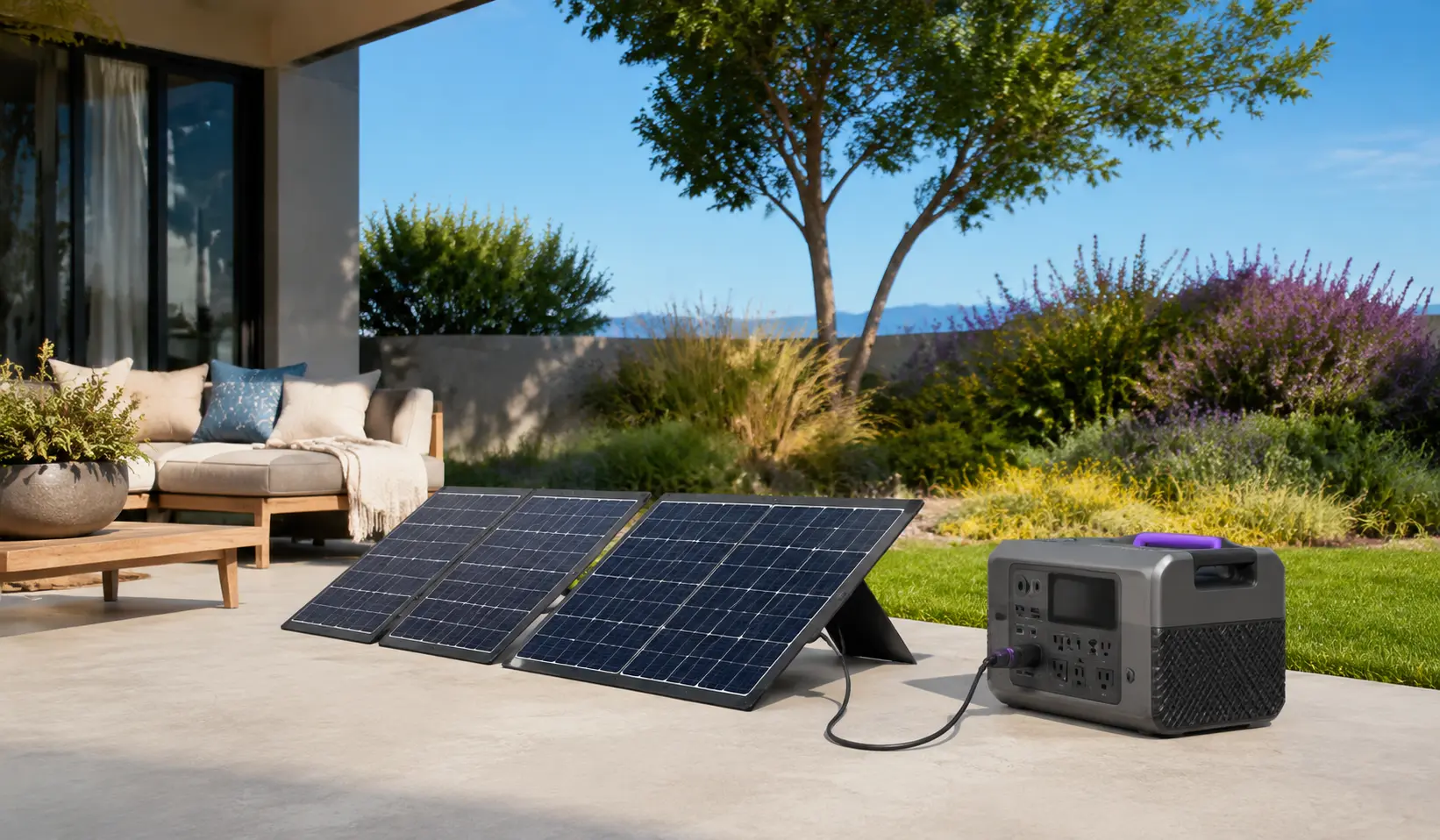
Wall charging is usually fastest when grid power is available. Solar can extend an outage plan, but output depends on panel wattage, compatibility, orientation, shade, temperature, and weather. Vehicle or generator charging can be useful where supported; follow the exact manufacturer instructions and input limits.
5. Plan connections safely
Plug individual devices directly into a power station only within its ratings. For home circuits or 240V loads, use manufacturer-approved equipment and a qualified electrician. Never backfeed a home through a wall outlet, and never use damaged, undersized, or improvised cables.
Portable power station vs. gasoline generator
| Factor | Portable power station | Gasoline generator |
|---|---|---|
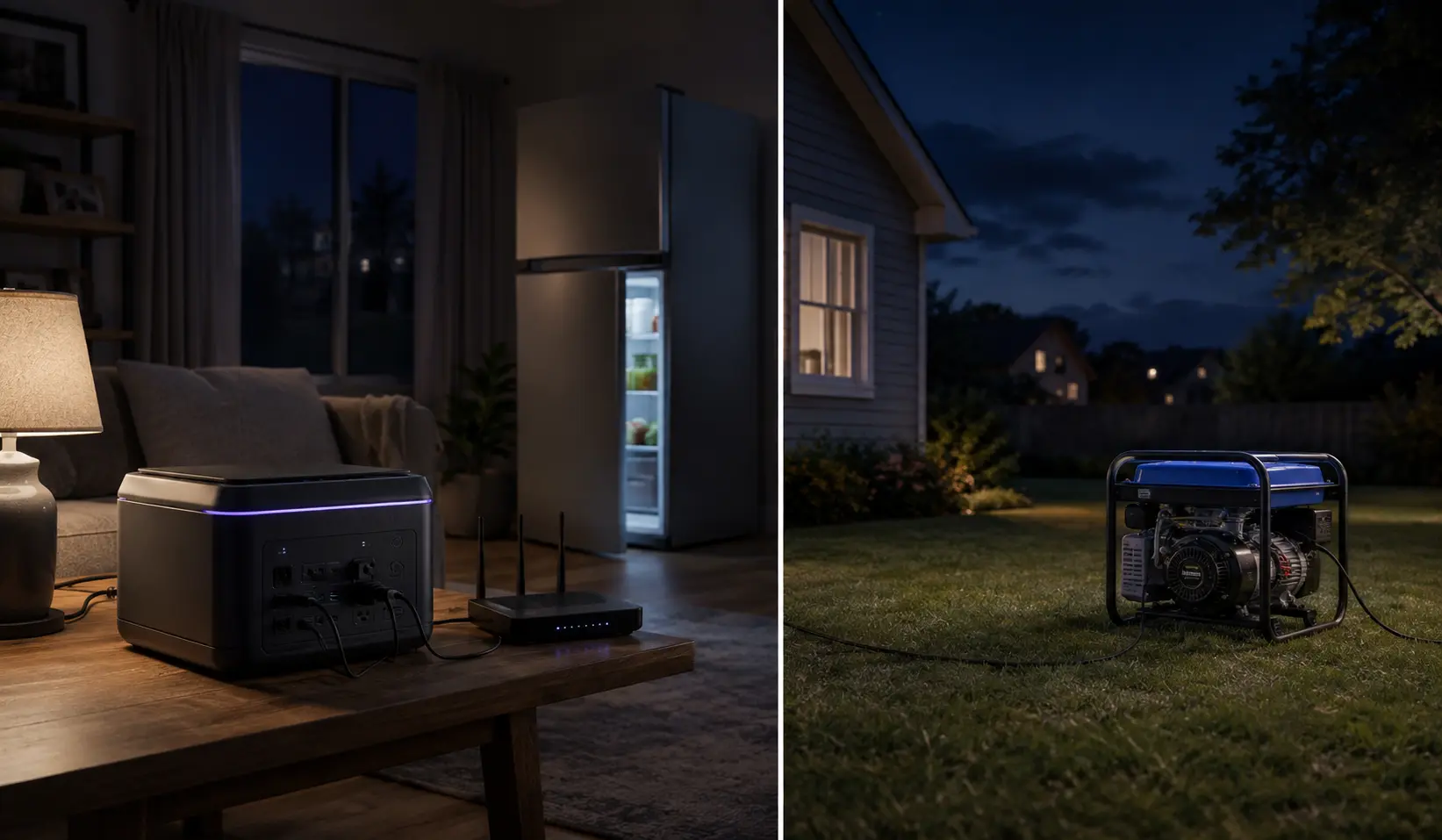
| Indoor use | No combustion exhaust, but ventilation and manufacturer placement rules still apply | Never operate indoors, in garages, or near openings because of carbon monoxide |
| Noise | Usually quiet except for cooling fans | Engine noise during operation |
| Energy supply | Limited by stored battery energy and recharge access | Can continue while safely refueled and fuel remains available |
| Maintenance | Battery care, firmware where applicable, cable inspection | Fuel, oil, engine maintenance, and storage procedures |
| Best use | Electronics, essential appliances, quiet backup, solar-compatible setups | Long-duration or high-energy use where fuel and safe outdoor operation are practical |
Frequently asked questions
What size portable power station do I need for a refrigerator?
Check the refrigerator label or manual for running and startup watts. Many buyers begin with a 1kWh-class station, but the correct choice depends on the appliance, desired runtime, ambient temperature, door openings, and other connected devices.
Can a portable power station run an entire house?
Some larger expandable 120V/240V systems can support selected household circuits or substantial loads when paired with approved transfer equipment. “Entire house” depends on your appliances and energy use. A licensed electrician should assess any connection to home wiring.
Can I leave a power station plugged in as a UPS?
Only if the specific model supports UPS or pass-through operation for your equipment. Confirm transfer time, supported load, charging mode, and long-term operating instructions in the manufacturer documentation.
Can I charge a portable power station with solar panels?
Yes, when the panel voltage, current, connectors, and total input fall within the station's solar-input specifications. Real charging performance varies with sunlight and conditions.
Is a portable power station safe to use indoors?
Battery power stations do not produce combustion exhaust like gasoline generators. Even so, follow the manufacturer instructions for ventilation, clearance, moisture, temperature, charging, and storage. Do not cover vents or use a unit that is wet or damaged.
How long does a portable power station last?
Runtime per charge depends on capacity and load. Service life depends on battery chemistry, cycle rating, temperature, storage state of charge, and usage. Check the model's published battery and warranty terms.
Final recommendation
For portable essential backup, start with the Anker SOLIX C1000 Gen 2 or Jackery Explorer 1000 v2. Step up to the C2000 Gen 2 when you want more runtime without moving to a full-size system. The BLUETTI Apex 300 and Anker F3000 serve buyers who value expansion and higher output, while the EcoFlow DELTA Pro 3 and Jackery Explorer 5000 Plus are better starting points for planned 120V/240V home-backup configurations.
Before ordering, make a load list and confirm the model's current specifications, included components, connection requirements, and manual. Browse the complete DANANOA portable power station collection or contact DANANOA if you need help comparing configurations.
Sources and methodology
Core capacity and output figures were checked against current manufacturer product pages or manuals from Anker C1000 Gen 2, Anker C2000 Gen 2, Anker F3000, BLUETTI Apex 300, EcoFlow DELTA Pro 3, Jackery Explorer 1000 v2, and Jackery Explorer 5000 Plus. Specifications and availability may change; verify the selected product page and manual before purchase.